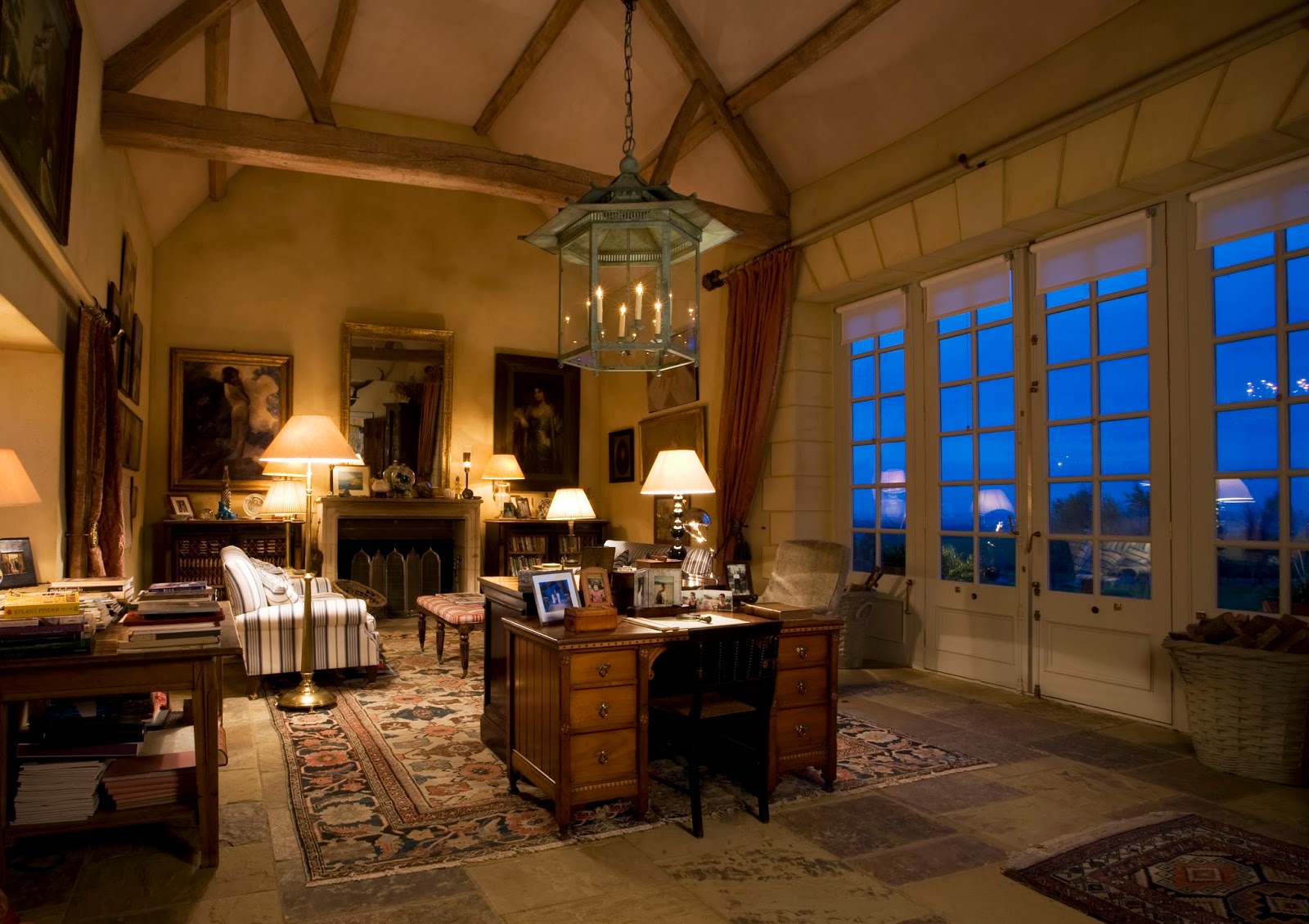
Lighting is a notoriously tricky thing to get right in your home. Too bright or too dark, everyone has an opinion on what is the best lighting!
Luckily, expert
Charles Edwards is on hand to offer some advice. Considered one of the leading designers and manufacturers of 19th and 20th Century inspired English, French and American lighting. Charles has developed a recognizable style in his design collection, which are regularly featured in notable publications including Architectural Digest, Veranda, World of Interiors, and House & Garden.
Check out Charles's tips for lighting below!
THE LIGHTING SCHEME
All spaces should be designed with layers of light:
You can achieve this by combining wall and ceiling lights, or by adding table lamps and floor lamps to the lighting scheme. Remember to make the most of natural light.
Hide wires for lights:
It isn’t always possible to have a lamp near the centre of a large room without its flex becoming a trip wire. Recessed sockets in the floor (preferably hidden under a bit of furniture) usually eliminate the problem.
Don’t dazzle:
Particular care needs to be taken that there is no unwanted glare from lights. Take care to position lights so that bulbs are not directly in eye line.
Mood lighting:
It makes sense to combine downlights/ hidden lighting and decorative lights on different circuits as well as on dimmers – it will make it much easier to create whatever mood you want.
SCALE
As a rule of thumb wall lights should be fitted approx 6’ from the floor and you should allow 7’6” headroom from the floor to the bottom of a ceiling light. This will determine if you should hang a chandelier, or use a flush mount ceiling light. Avoid choosing lanterns that are too small or ‘mean’ and be careful not to hang them too high.
Use ceiling lights to break up spaces in large areas. Ceiling lights are useful in open plan interiors where they can be used to define specific areas within the space. Define the space: Use pendants or hanging lights above an island or a kitchen table to define the area and add a decorative element. If you can’t find the right lights to complement the shape of the island or table, use a series of lights instead.
It is worth considering that the light fittings you use should usually be in the region of 15-30cm (6-12ins) smaller in width than the island or table beneath them. However, it is also worth taking into account the size of the room. Decorative Lights should help to reinforce a room’s sense of scale and choosing lights which are too small can often look a bit mean.
Positioning the light:
The lowest part of a hanging light should normally be at least 107cm (42") above a work surface, or even greater if the light is above a sink or hob. Having decorative lights in a place where they may get splattered or dirty will just create extra work as they will need to be cleaned regularly. Lights hanging above a kitchen table can be positioned slightly lower as long as there is no risk of people banging their heads when standing up or laying the table.
When hanging a lantern in stairwell, it is usual for the light be hung just below half the height of the room so you can still see the top of the lantern from the landing. For halls with several stories a tiered hanging formation will create focal points for each landing.
STYLE
It is important not to feel hidebound by the period of the property when selecting the design of light fitting. Lighting fixtures have always changed with technology, from the transition from candles, to oil, to gas, and finally to electricity. As long as the design and proportions of a lantern suit the architecture of a space, it will make an enormous difference and add a real presence.
ATMOSPHERE
Chandeliers or hanging lanterns can be used to create drama and mood. If there is a window above the door centre the chandelier so it can be seen from the outside.
Using the same hanging lantern design outside the house in the porch as well as inside in the hallway will make a strong design statement. Most Charles Edwards hanging lanterns can be used for exterior, or interior use. A popular choice is the Blake Lantern.
Using a series of hanging lanterns will create rhythm and a flow to the space.
The finish of the lighting fixtures will help create the atmosphere. Nickel will add a crisp, clean look to the space and can be used on traditional designs to add a contemporary twist. Brass and bronzes can be used to create a more traditional and warm ambience. All Charles Edwards designs are available in a wide range of finishes to ensure that you can achieve the right look with your chosen design.
When it is dark outside, large areas of glass in a kitchen, in a skylight or within sliding doors, for example, can look like a big black mirror if there is no external light beyond them. A couple of garden lanterns or wall lights is all it takes to turn a negative into a positive and create a greater sense of space by allowing people to see outside.
How do you use lighting in your home?